Why gutters overflow in heavy rain and how to fix it
When sudden cloudbursts sweep across North Georgia, standard residential drainage systems often buckle under the sheer volume, sending sheets of water cascading over gutter edges directly into delicate landscaping and siding. Watching water pour over your roofline is a clear warning sign of system failure that can quickly lead to rotted fascia boards, saturated crawlspaces, and expensive foundation repairs.
In this guide, you will learn how to diagnose hidden pitch flaws and calculate your roof's true drainage demand. You will also discover whether high-capacity upgrades or professional
gutter installation from Master Craft Gutters and Construction LLC are the right solution to protect your home from severe downpours throughout the Cumming area.
TL;DR: Key takeaways for property owners
- Gutter overflow occurs when water volume exceeds channel capacity due to organic debris dams, incorrect slope, undersized 5-inch troughs, or restricted downspout discharge.
- Peak rainfall intensities across North Georgia frequently exceed 6.5 inches per hour during short-duration storm bursts, overwhelming systems that lack proper capacity.
- Upgrading to continuous, on-site roll-formed 6-inch seamless K-style gutters paired with oversized 3x4-inch downspouts increases total water evacuation capacity by more than 40 percent.
Understanding the mechanics of gutter overflow in severe storms
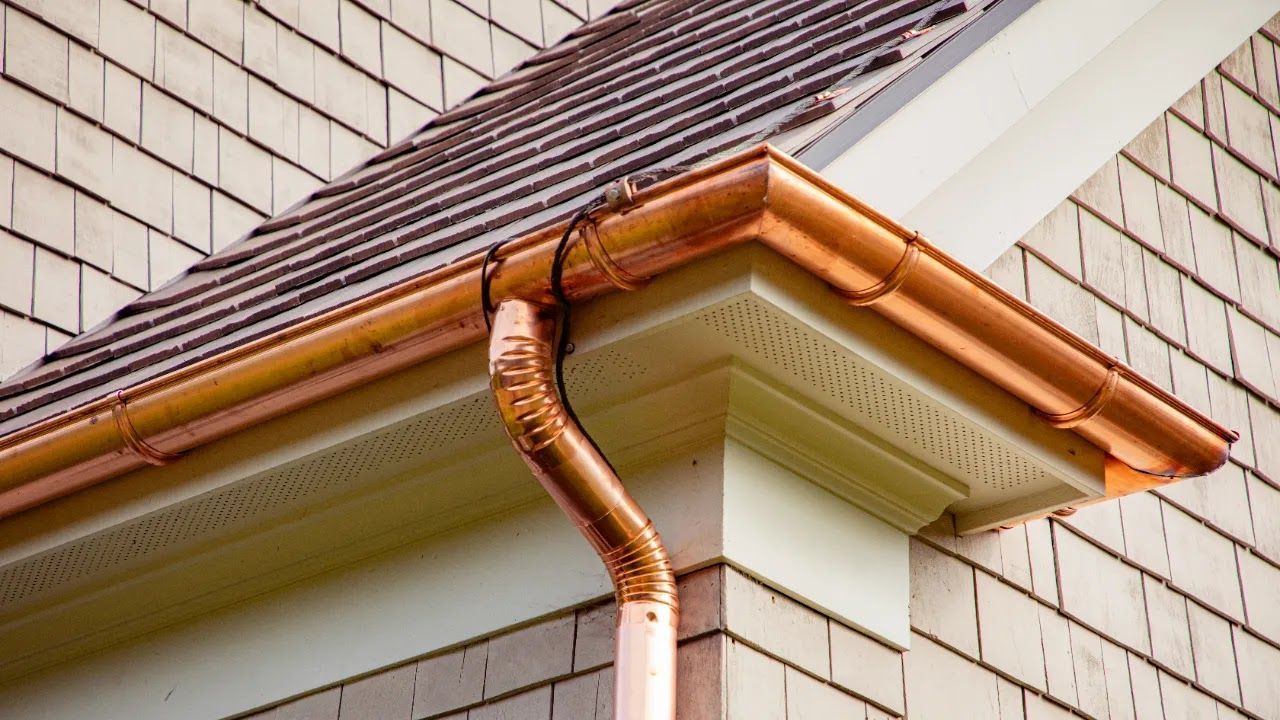
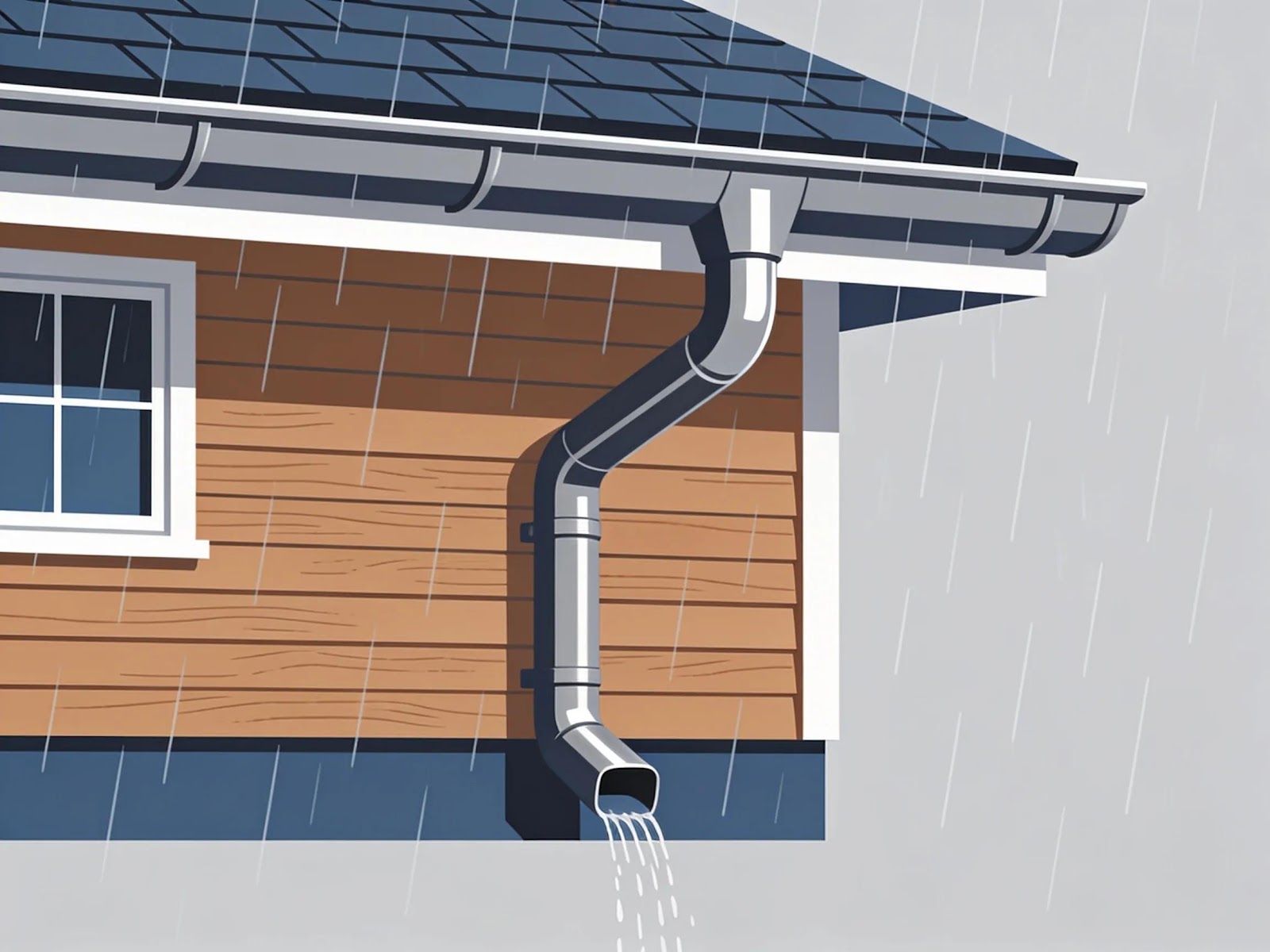
Gutter overflow occurs whenever the rate of storm runoff entering a gutter section exceeds the combined storage volume and evacuation velocity of the trough and downspout network.
During severe weather patterns across North Georgia, precipitation rates regularly spike beyond basic residential drainage assumptions. When rainfall volume outpaces gravitational drainage capacity, water spills over the front lip or backs up behind the fascia apron.
According to meteorological benchmarks established in the
NOAA Atlas 14 Precipitation-Frequency Atlas, North Georgia experiences peak 1-hour precipitation intensities ranging between 3.4 and 3.7 inches per hour during rare, catastrophic 100-year cloudbursts, though short-term 5-minute bursts can briefly reach equivalent mathematical rates of 6.5 to 7.5 inches per hour.
The physics of storm runoff depends directly on roof surface geometry, pitch-driven velocity, and surface friction. As rainfall rates intensify, roof valleys act as natural collection funnels, concentrating fast-moving sheets of water into small, localized gutter zones. If the gutter profile lacks the physical depth to absorb this volume, or if the downspout cannot evacuate water fast enough, water builds up quickly, forcing continuous sheets over the outer edge.
| Overflow Failure Mechanism | Primary Physical Cause | Immediate Visual Indicator | Structural Risk Level |
|---|---|---|---|
| Hydraulic Volume Overload | Trough cross-section too small for roof area | Continuous sheeting along entire gutter run | High (Foundation settling, soil erosion) |
| Downspout Choke Point | Outlet orifice constricted or clogged | Water gushing over corners near downspout | High (Fascia rot, soffit saturation) |
| Longitudinal Slope Failure | Sagging brackets or zero-pitch installation | Localized mid-span pooling and spilling | Moderate (Bracket failure, standing mosquito pools) |
| Valley Inertial Overshoot | Steep roof valley funnels water over outer lip | Water shooting straight past corner turns | Moderate (Landscape trenching, mulch displacement) |
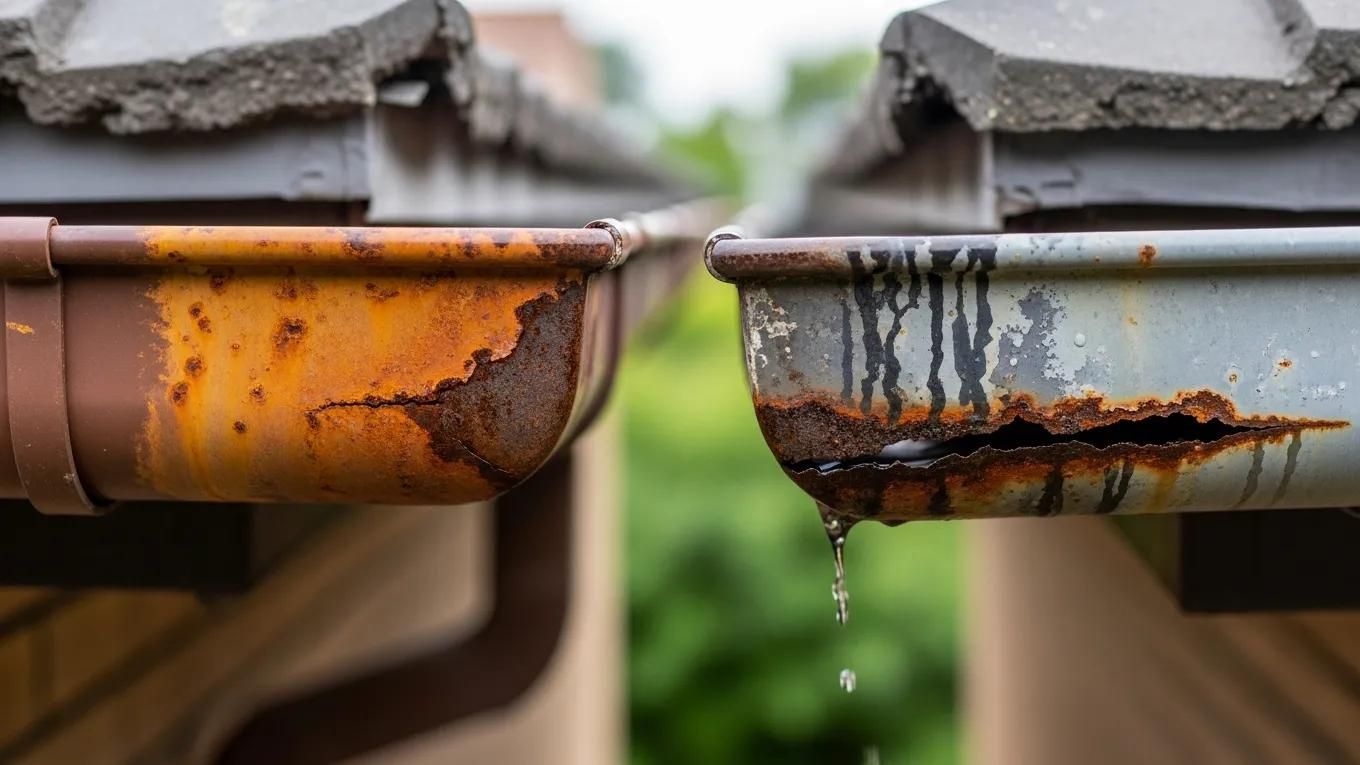
| Fascia Apron Infiltration | Back edge unseated below drip edge flashing | Water trickling down exterior wall behind gutter | Severe (Hidden structural wood rot, mold growth) |
The 4 primary technical causes of overflowing gutters
Systemic gutter overflow originates from four distinct engineering and maintenance issues: debris clogs, improper pitch alignment, insufficient trough sizing, and restricted downspout capacity.
1. Organic debris accumulation and flow dams
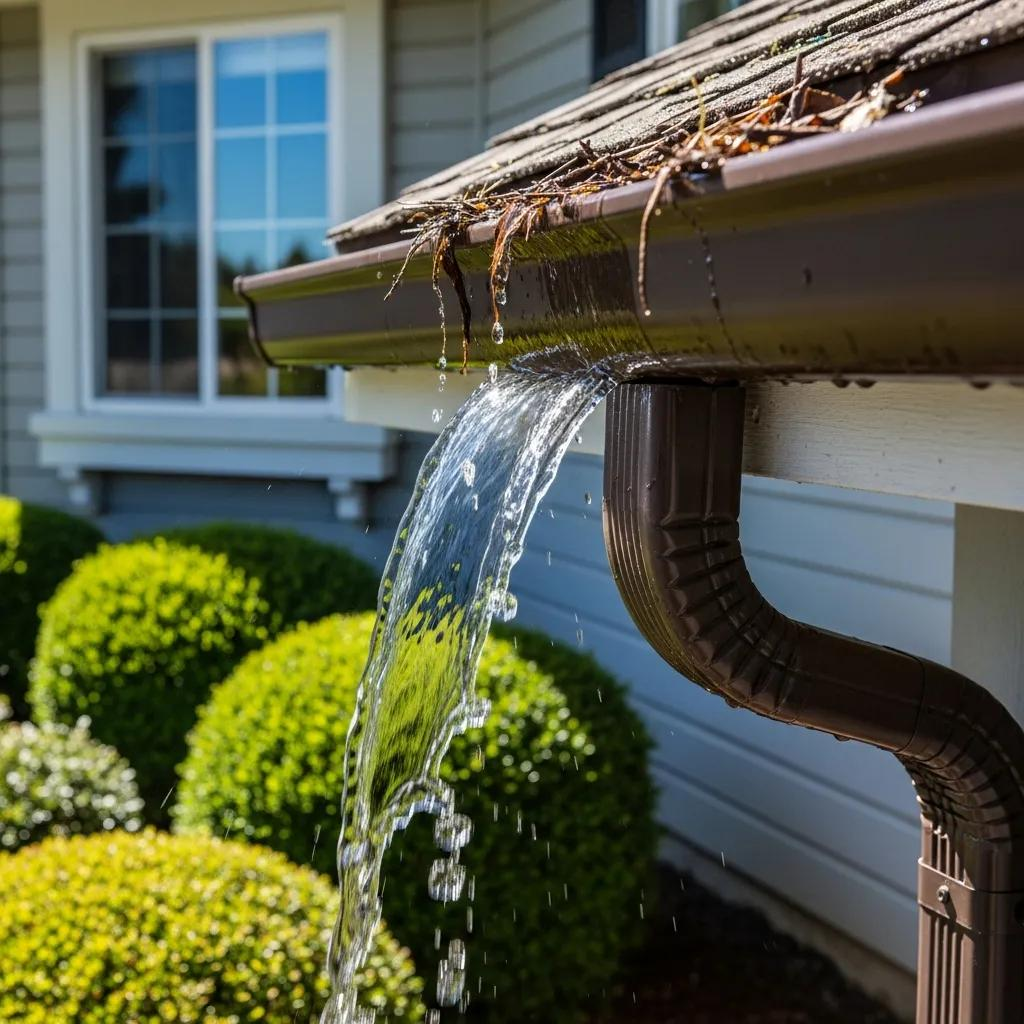
Decaying leaves, pine needles, seed pods, and roof shingle granules collect along the floor of the gutter trough. Even if the top of the gutter looks clear, wet silt settles at the base, creating friction that slows water velocity. When a heavy storm starts, this loose matter gets pushed toward the drop outlet, forming a dense barrier over the downspout opening. As a result, water backs up along the entire channel within minutes of rain starting.
2. Incorrect longitudinal slope and bracket sagging
Technical standards outlined in the SMACNA Architectural Sheet Metal Manual accommodate completely level gutter designs, but provide sizing calculations for optional slopes typically ranging from 1/16 inch to 1/8 inch per linear foot to increase drainage velocity. When gutters are installed level for visual uniformity, or when fascia brackets pull loose under heavy loads, low points develop along the run. Water collects in these sagging sections during storms, causing localized spillovers long before the downspout reaches its full discharge capacity.
3. Undersized trough cross-sectional area
A traditional 5-inch K-style gutter holds approximately 1.2 gallons of water per linear foot. On roofs with steep pitches, gravity accelerates water down the roof slope at high speed. Homeowners upgrading their drainage systems benefit from modern seamless 6-inch K-style gutter systems, which hold approximately 2.0 gallons per linear foot, providing a 40 percent increase in capacity that prevents overflow on long roof runs.
4. Downspout flow bottlenecks and exit restrictions
A basic 2x3-inch rectangular downspout provides only 6 square inches of cross-sectional drainage area, limiting discharge to roughly 180 to 200 gallons per hour under gravity flow. When heavy rain generates hundreds of gallons of water per minute across a roof, a single 2x3-inch downspout quickly chokes. Transitioning to commercial-grade 3x4-inch downspouts provides 12 square inches of cross-sectional area, doubling drainage throughput and eliminating backpressure bottlenecks.
| Gutter & Downspout Component | Dimensions & Specs | Discharge Capacity Rating | Ideal Installation Profile |
|---|---|---|---|
| Standard Residential Gutter | 5-inch K-Style Aluminum | ~1.2 gallons / linear foot | Small single-story homes, shallow roof pitch (<4:12) |
| High-Capacity Seamless Gutter | 6-inch K-Style Aluminum | ~2.0 gallons / linear foot | Multi-story homes, steep roofs, North GA storm zones |
| Standard Downspout | 2x3 inch Rectangular | ~6.0 sq. inches cross-section | Short gutter runs under 25 feet, low-volume roof planes |
| Oversized Downspout | 3x4 inch Rectangular | ~12.0 sq. inches cross-section | Long gutter runs over 30 feet, steep roof intersections |
How to determine the right gutter size for your home

Matching your gutter size to your home’s architectural profile and roof steepness ensures your drainage system handles peak rainfall without overflowing.
Rather than trying to calculate complex hydraulic equations yourself, you can evaluate your home's drainage needs based on your roof slope, square footage, and architectural complexity. Steep roofs and two-story homes shed water at significantly higher velocities, demanding deeper channels and wider downspouts to prevent spillover.
| Home Style | Roof Pitch | Gutter Size | Downspout Spec |
|---|---|---|---|
| Single-Story Ranch (Small Footprint) | Low Slope (Flat to 4:12) | 5-inch K-Style Seamless | 2x3-inch Standard Rectangular |
| Two-Story Traditional / Suburban Home | Moderate Slope (5:12 to 7:12) | 6-inch K-Style Seamless | 3x4-inch Oversized Rectangular |
| Multi-Story Craftsman / Modern Farmhouse | Steep Pitch (8:12 to 11:12) | 6-inch High-Capacity Seamless | 3x4-inch Oversized Rectangular + Valley Guards |
| Large Custom Estate with Complex Valleys | Very Steep (12:12+) | 6-inch Heavy-Gauge Seamless | 3x4-inch Oversized (High-Density Placement) |
Ground-level warning signs: How to spot overflow issues
You can identify most gutter alignment and capacity failures from the lawn without climbing a ladder.
Phase 1: Clear weather visual inspection
- Check your gutter line from the ground to spot any sections that visibly dip or pull away from the fascia board.
- Inspect the bottom of your fascia boards for peeling paint, dark water stains, or soft wood caused by water backing up behind the channel.
- Look for soil trenching, washed-out mulch, or exposed plant roots directly beneath the roofline where water consistently spills over.
- Verify that your downspouts discharge runoff at least 5 to 10 feet away from the foundation through solid extensions or buried lines.
Phase 2: Live storm observation
- Watch the gutter run during a heavy downpour to see water sheets over the front edge while only a small trickle exits the downspout.
- Check inside corners and valleys to confirm whether concentrated runoff shoots past the corner turns.
- Inspect exterior brick and siding to make sure water is not trickling down the wall behind the gutter channel.
Structural consequences of unmanaged gutter overflow
Chronic gutter overflow channels thousands of gallons of water directly against foundation footings, causing soil settlement, basement flooding, and costly structural rot.
Broader
geotechnical and civil engineering studies demonstrate that uncontrolled roof drainage is a primary cause of residential foundation failure and basement water intrusion. When storm runoff saturates the soil directly next to a home, it creates hydrostatic pressure against foundation walls. Over time, this pressure causes foundation cracking, interior slab dampness, and crawlspace mold issues.
In addition, water running behind overflowing gutters rots wood fascia boards, degrades soffits, and damages roof decking, creating entry points for pests and moisture. Choosing professional
gutter installation in Cumming, GA provides a permanent, engineered solution that diverts storm runoff away from structural components and protects property value.
| Damage Progression Phase | Affected Building Components | Primary Structural Symptoms | Estimated Repair Scope |
|---|---|---|---|
| Phase 1: Surface Saturation | Landscaping, topsoil, mulch beds | Soil trenching, plant root washouts, mud splattering | Minor landscaping re-grading |
| Phase 2: Exterior Envelope Rot | Fascia boards, soffits, roof rafter tails | Softened wood framing, peeling paint, pest intrusion | Fascia board and soffit replacement |
| Phase 3: Sub-Grade Foundation Damage | Concrete footings, basement walls, crawlspaces | Hydrostatic wall cracking, basement dampness, mold | Foundation underpinning, waterproofing |
Professional solutions to eliminate chronic gutter overflow

Resolving chronic overflow requires engineered improvements to gutter sizing, bracket strength, downspout dimensions, and debris filtration without high-pressure franchise markups.
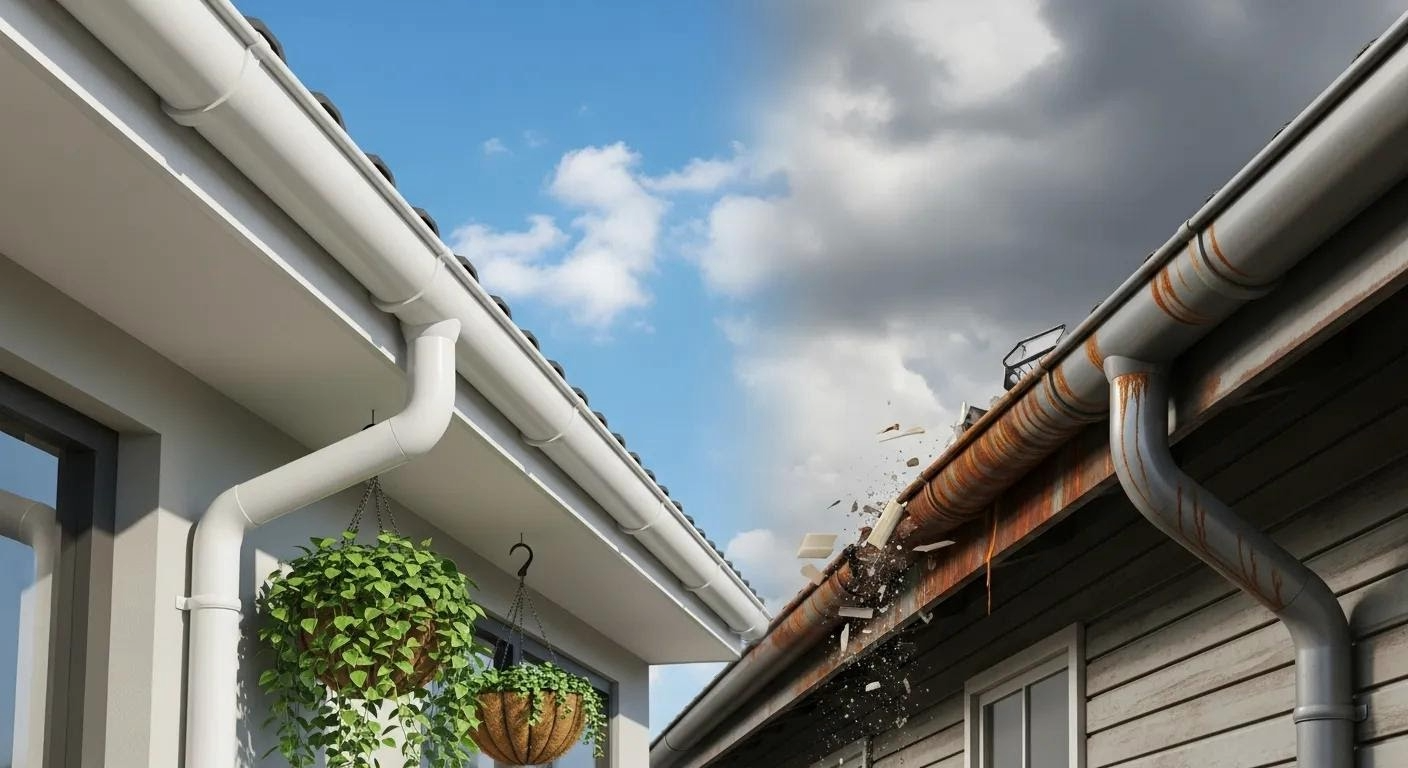
- Upgrading to custom on-site roll-formed 6-inch seamless aluminum gutters: Replacing narrow 5-inch sectional gutters with continuous, custom on-site roll-formed 6-inch seamless aluminum gutters fabricated to your roofline's exact dimensions eliminates joint leaks and increases water capacity by 40 percent for steep rooflines.
- Installing oversized 3x4-inch downspouts: Upgrading from 2x3-inch to 3x4-inch downspouts doubles vertical discharge area, preventing backpressure and water buildup during severe rain.
- Installing heavy-duty hidden hangers: Securing gutters with heavy-gauge aluminum hidden hangers screwed directly into rafter tails every 24 inches prevents sagging under heavy storm loads.
- Adding custom valley splash guards: Installing high-sided aluminum diverters at roof valley intersections keeps fast-moving runoff inside the gutter channel.
- Installing tailored gutter protection systems: Selecting the appropriate guard system—such as surgical-grade micro-mesh for dense pine needles or high-flow perforated aluminum for mixed broadleaf oak canopies—ensures lasting debris filtration matched to your property's specific tree canopy.
Frequently asked questions about gutter overflow
Addressing the most common diagnostic and maintenance questions helps property owners identify specific drainage flaws and choose the right corrective measures.
Why do my gutters overflow even when they are completely clean?
Gutters overflow despite being free of leaves when the physical trough volume, slope, or downspout capacity is insufficient for the roof surface area and rainfall intensity.
When roof valleys funnel large volumes of high-velocity water into a standard 5-inch trough, the water sheets over the front lip before reaching the outlet. Similarly, if the gutter lacks proper slope or relies on narrow 2x3-inch downspouts, water backs up inside the channel and spills over during heavy downpours.
What is the difference between 5-inch and 6-inch gutters during heavy storms?
Seamless 6-inch K-style gutters hold roughly 40 percent more water volume than 5-inch gutters and pair with oversized 3x4-inch downspouts to double vertical discharge capacity.
A standard 5-inch gutter holds approximately 1.2 gallons of water per linear foot, making it suitable only for smaller, low-slope roofs. A 6-inch gutter holds 2.0 gallons per linear foot and handles high-velocity runoff from steep architectural shingles and expansive multi-story rooflines throughout North Georgia.
Can installing gutter guards cause water to overshoot the gutter?
Low-quality or solid-hood gutter covers can cause water overshooting during heavy cloudbursts if surface tension fails to pull high-velocity runoff into the channel.
In contrast, custom-matched protection systems allow high-volume sheet flow to pass directly into the trough while blocking pine needles, seed pods, and roof grit. For steep roof valleys, combining tailored guards with aluminum splash diverters prevents water from shooting past the outer edge.
How much pitch do gutters need to prevent standing water and overflow?
Gutters require a continuous downward slope of at least 1/16 inch to 1/8 inch per linear foot toward each downspout drop outlet.
For a standard 30-foot gutter run, this equates to roughly 3/8 to 1/2 inch of total drop from the high point to the downspout. If the gutter is installed level or sags in the center due to loose mounting brackets, water pools and overflows at the lowest point.
Strategic recommendations and next steps
Ignoring overflowing gutters puts your home at risk for expensive foundation repairs, landscape erosion, and structural wood rot. If your gutter system overflows during normal North Georgia rainstorms, our straightforward inspection provides a thorough, honest evaluation of your roofline to determine whether re-sloping, downspout expansion, or a high-capacity seamless gutter upgrade is the right solution.
Take proactive steps today to ensure your drainage system protects your home through every season.
Author
Jesse Vlaun is the founder of Master Craft Gutters & Construction LLC, a veteran-owned exterior drainage contractor based in Cumming, Georgia. With extensive hands-on expertise across North Georgia residential rooflines, Jesse provides homeowners with straightforward, practical guidance on custom on-site seamless roll-forming, precision hydraulic sizing, fascia rot prevention, and tailored leaf protection systems.