How heavy North Georgia rains cause foundation damage—and why 6-inch seamless gutters are essential for Cumming homes
When severe rainstorms sweep across Forsyth County, your roof collects thousands of gallons of concentrated stormwater in minutes. Without a properly engineered drainage system, overflowing water pours directly onto your landscaping, saturating the dense red clay soil and putting immense pressure on your foundation.
You'll learn how heavy rainfall impacts concrete footings and why precision
gutter installation safeguards your home from structural settling and wood rot through every season.
TL;DR
- Cumming gets over 54 inches of rainfall every year. Standard 5-inch sectional gutters overflow during peak storms, while 6-inch seamless aluminum gutters hold 50% more water volume.
- Saturated Forsyth County red clay expands against foundation walls, creating lateral pressure that causes basement cracks, slab shifting, and crawl space moisture.
- Traditional sectional gutters leak at joints every 10 feet. Custom on-site continuous roll-forming creates a seamless channel tailored to your roofline.
- Correct pitch alignment (1/16 to 1/8 inch drop per foot, or 1/2 inch drop per 10 feet) keeps water moving, protecting fascia boards from decay.
Protect your home's structural integrity.
Schedule a free gutter inspection and estimateThe hydrology of North Georgia storms and foundation vulnerability
High-volume North Georgia rainfall overpowers undersized drainage channels, directing concentrated runoff into soil surrounding your home's foundation.
Cumming, Georgia averages over 50 inches of rainfall each year according to climate monitoring data from the
NOAA National Centers for Environmental Information. During summer downpours and sudden tropical storms, local weather can drop 2 to 3 inches of rain per hour.
Here's how roof runoff adds up during a typical storm:
- One inch of rain falling on a 2,000-square-foot roof yields 1,246 gallons of water.
- A sudden 2-inch storm dumps nearly 2,500 gallons of water off your roof within 45 to 60 minutes.
When unmanaged water sheets off steep asphalt or metal roof panels, thousands of gallons hit the soil within a 2-foot perimeter around your slab or basement walls. Over time, this concentrated runoff cuts deep trenches into lawns, strips away landscaping mulch, and pools directly against concrete footings.
How Forsyth County red clay accelerates structural settling
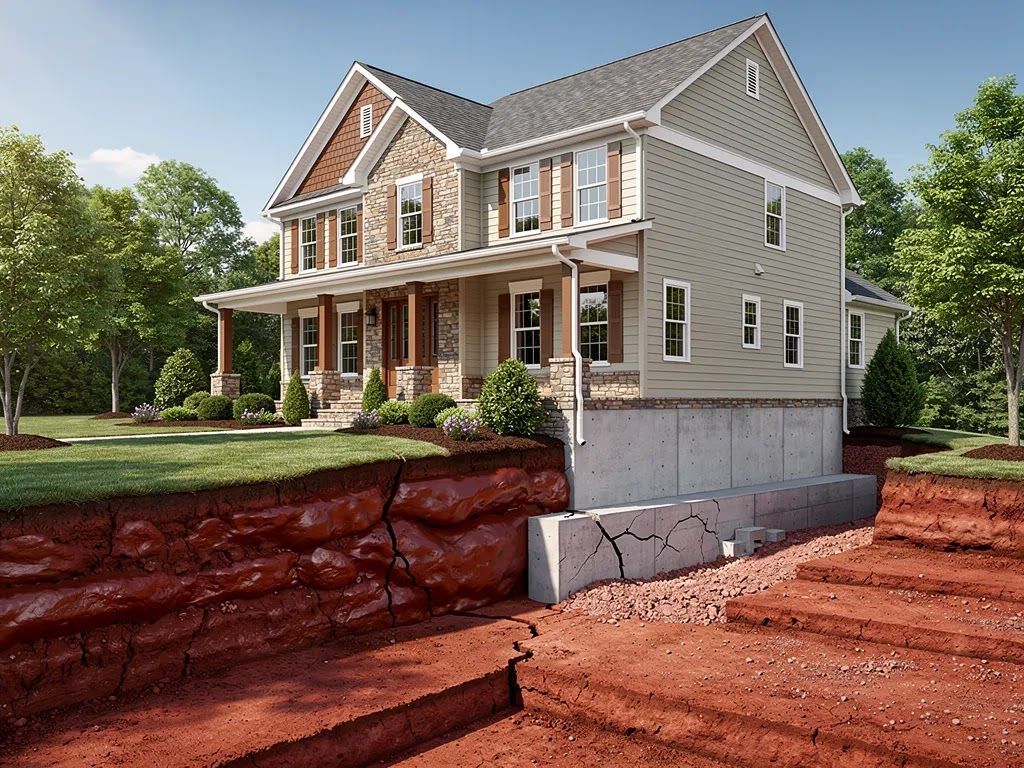
Local red clay soil expands when wet and shrinks when dry, creating cyclical soil movement that forces concrete foundations to crack and shift.
The soil profile across Cumming and greater Forsyth County consists predominantly of Cecil soil series clay. While it has a low shrink-swell potential, local Cecil clay becomes incredibly sticky when wet and bakes into a dense, hard-crusted surface as it dries out.
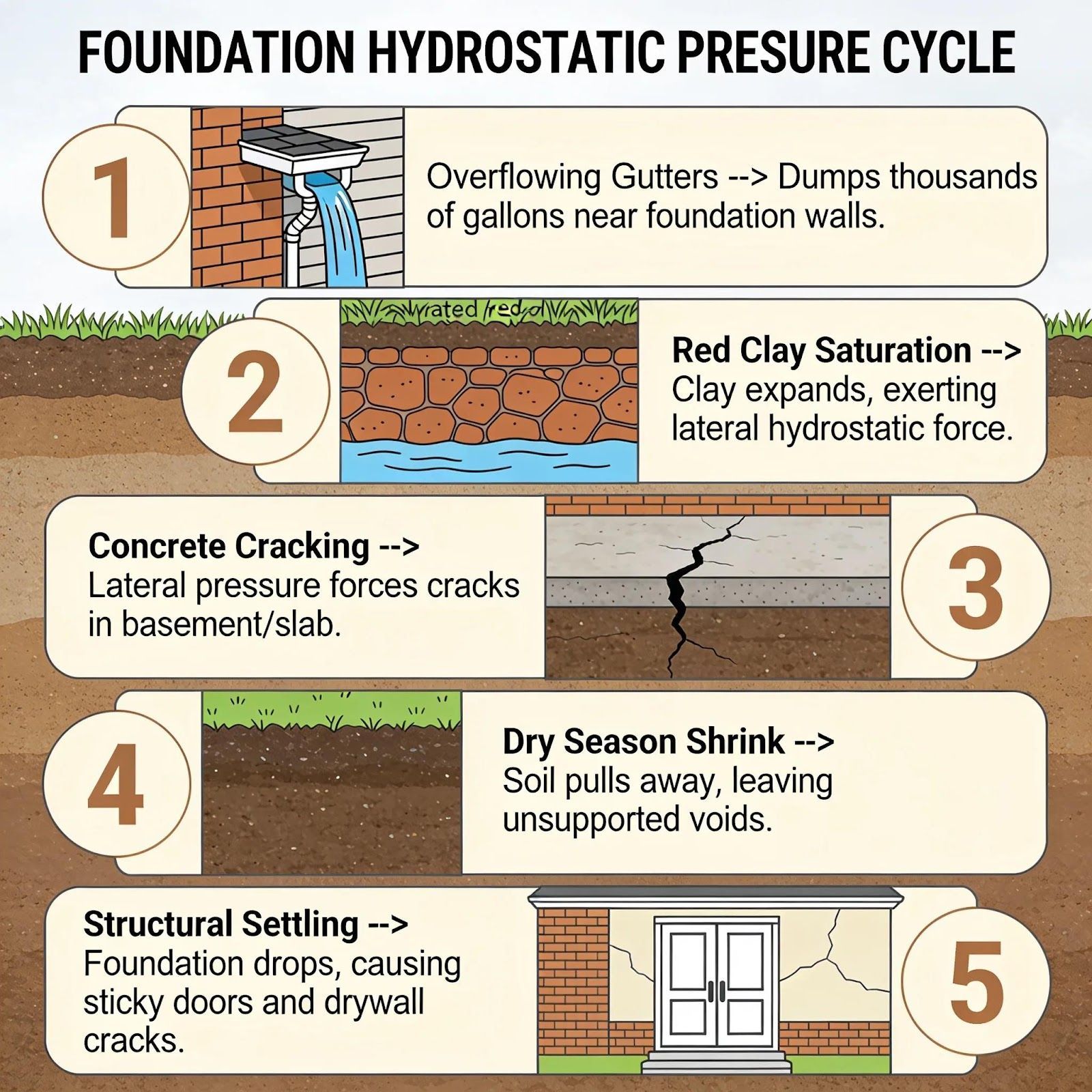
When uncontained roof water saturates red clay around your home, three structural issues occur:
- Saturated clay expands and presses hard against poured concrete or cinder block basement walls, causing inward wall bowing and hairline cracks.
- As saturated clay dries out during late summer dry spells, it contracts. This expansion-contraction cycle leaves empty voids beneath concrete footings.
- When footings rest on unevenly supported soil, sections of the house sink at different rates, leading to sticking doors, diagonal drywall cracks, and uneven floors.
Comparing 5-inch sectional and 6-inch seamless systems
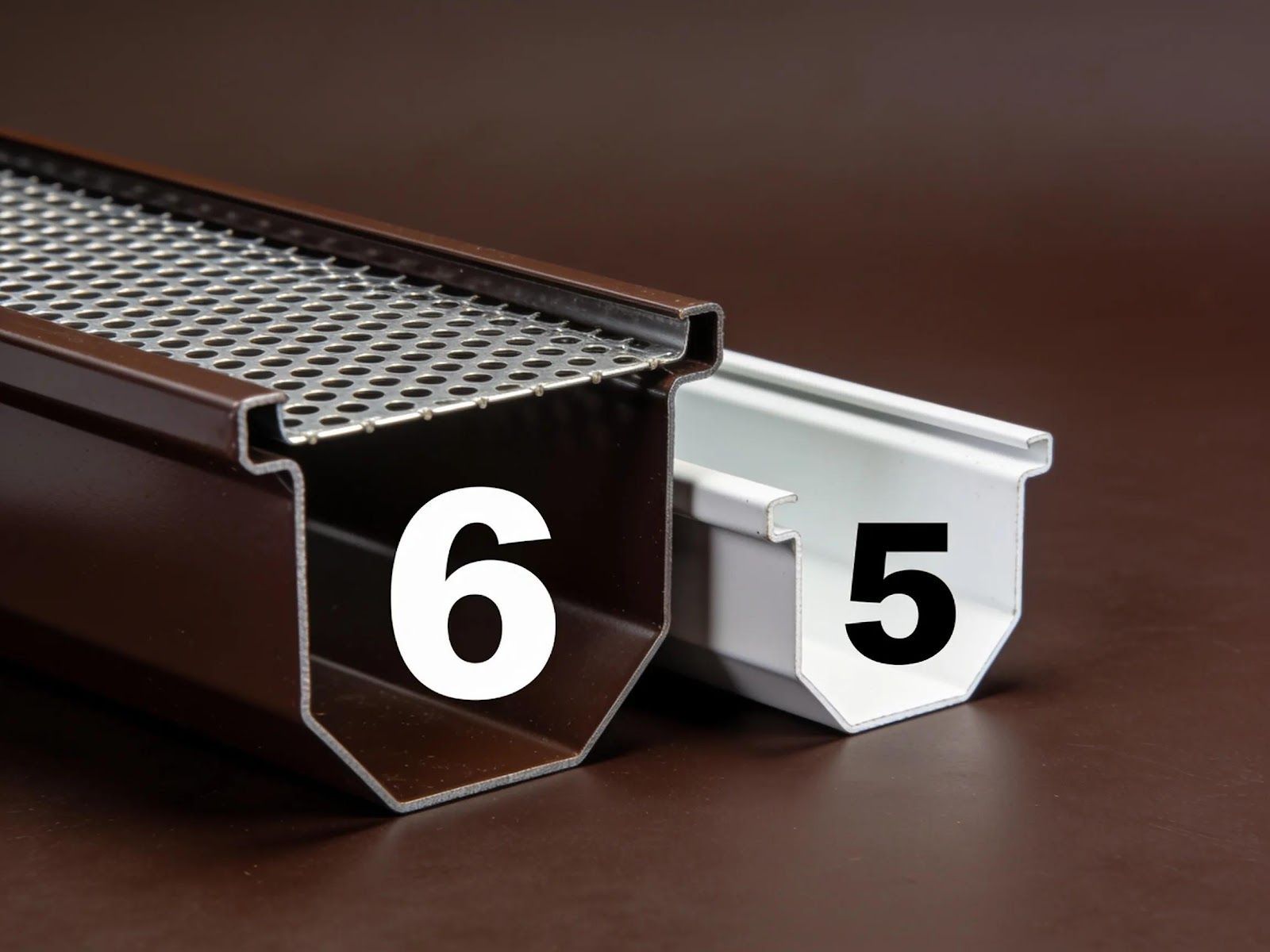
6-inch seamless aluminum gutters provide 67% more water volume capacity and eliminate leak-prone joints every 10 feet.
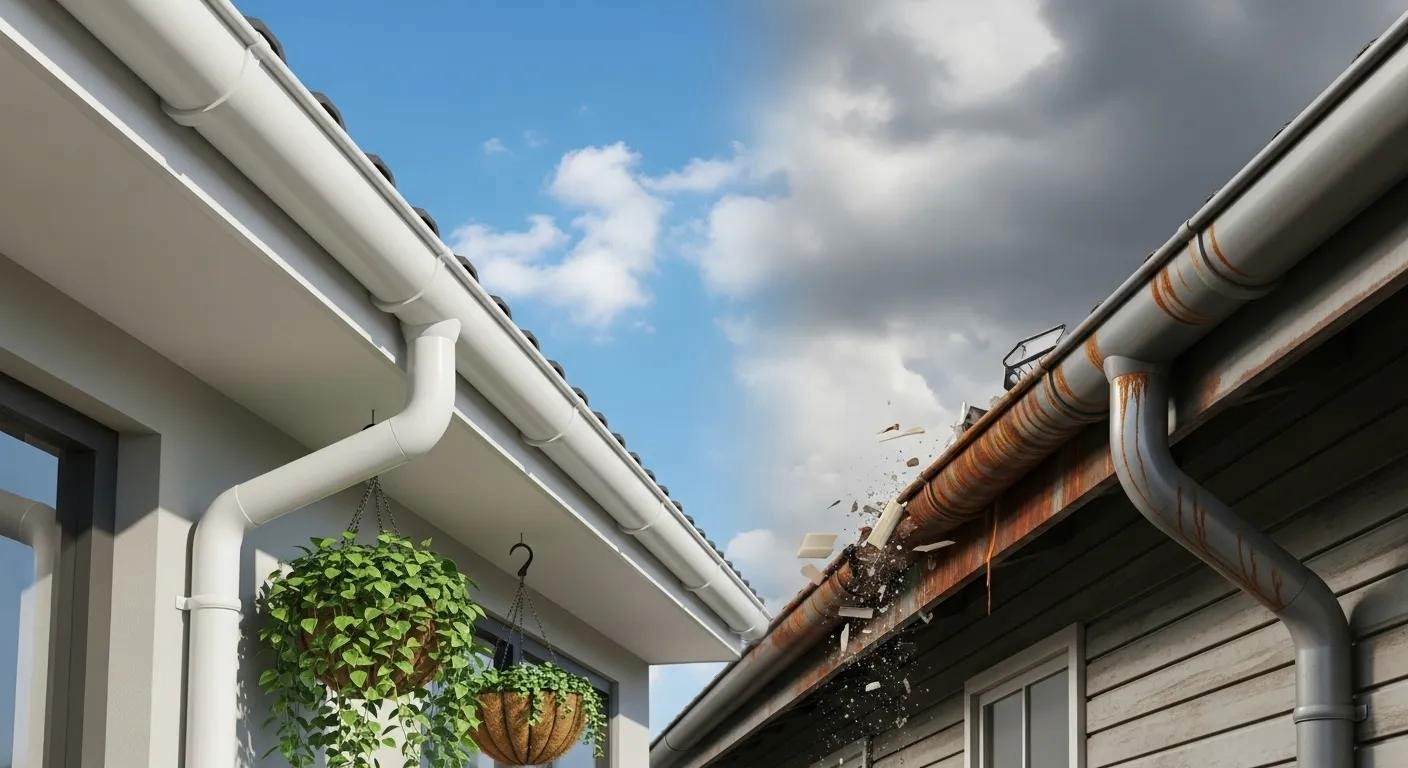
Developers originally built many suburban Cumming homes with standard 5-inch sectional vinyl or thin aluminum gutters. While these smaller systems handle light drizzles, they fail during typical North Georgia severe weather.
The table below outlines the mechanical differences between standard sectional systems and heavy-gauge 6-inch seamless aluminum setups:
| System feature | Standard 5-inch sectional | Mastercraft 6-inch seamless aluminum |
|---|---|---|
| Water volume capacity | ~1.2 gallons per linear foot | ~2.0 gallons per linear foot (+67% increase) |
| Downspout dimensions | 2x3 inches (prone to debris clogs) | 3x4 inches (maximizes discharge speed) |
| Construction method | Pre-cut 10-ft sections joined by sealant | Continuous custom roll-formed on-site |
| Seam leak risks | High (sealants degrade every 3–5 years) | Zero mid-run seams (leaks only at end caps) |
| Material thickness | Light .025 gauge aluminum or PVC | Heavy-gauge .032 architectural aluminum |
| Pine needle tolerance | Poor (narrow channel jams easily) | High (wide trough handles heavy debris flow) |
Why on-site continuous roll-forming prevents leaks
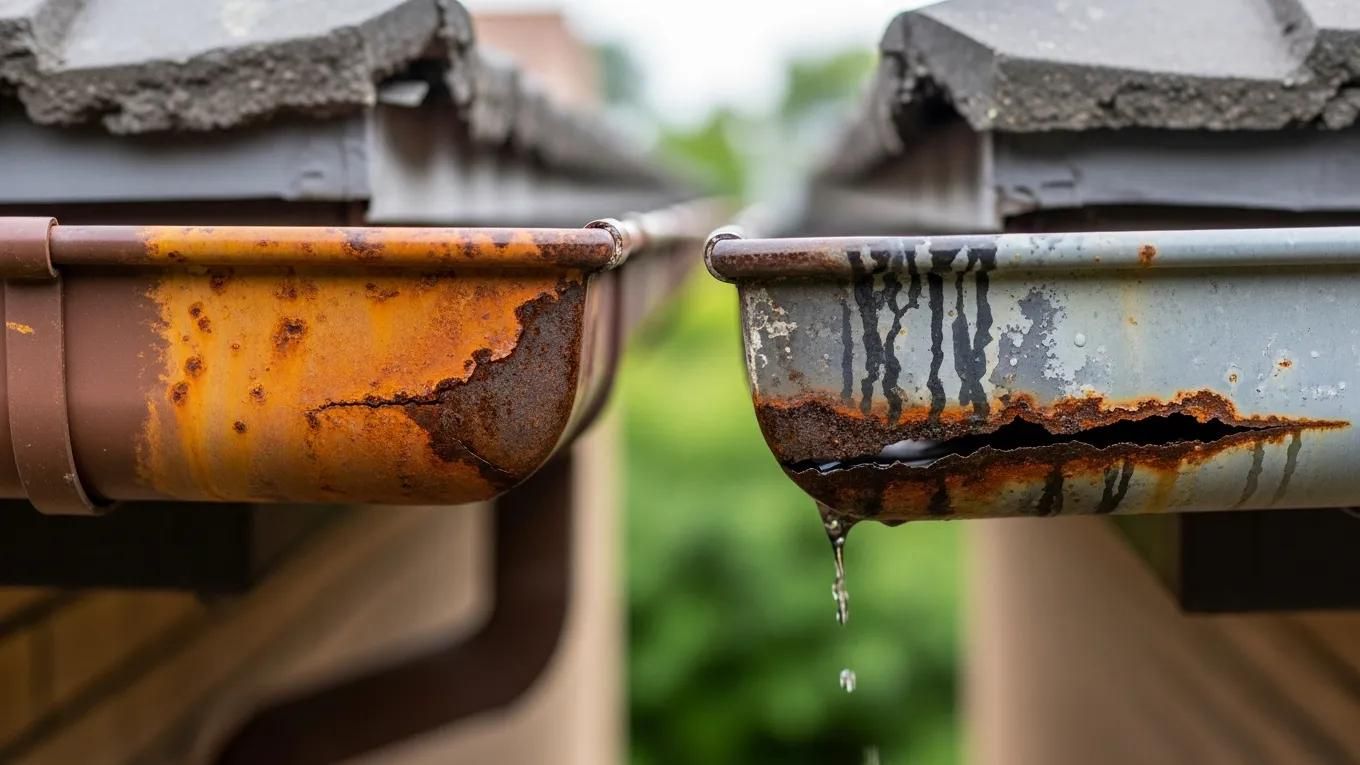
Traditional sectional gutters depend on overlapping joints glued together with silicone or caulk. Thermal expansion and contraction cause these sealants to dry out and fail within a few seasons. Once a joint breaks, water drips constantly behind the trough, rotting wood fascia boards and soaking your siding, decks, or foundation below.
Master Craft Gutters solves this vulnerability using mobile extrusion equipment. Our technicians bring raw coils of heavy-gauge .032 aluminum directly to your driveway and custom roll-form each trough to the exact inch of your home's roofline.
Master Craft’s hydrological capacity framework for Cumming homes
Master Craft Gutters and Construction LLC uses precise mathematical sizing to match trough dimensions and downspout count to your roof's surface area and pitch.
To ensure your drainage system handles peak downpours without spilling over, we apply Master Craft's Hydrological Capacity Framework. This engineering-first approach calculates the exact water discharge requirements of your home based on three variables:
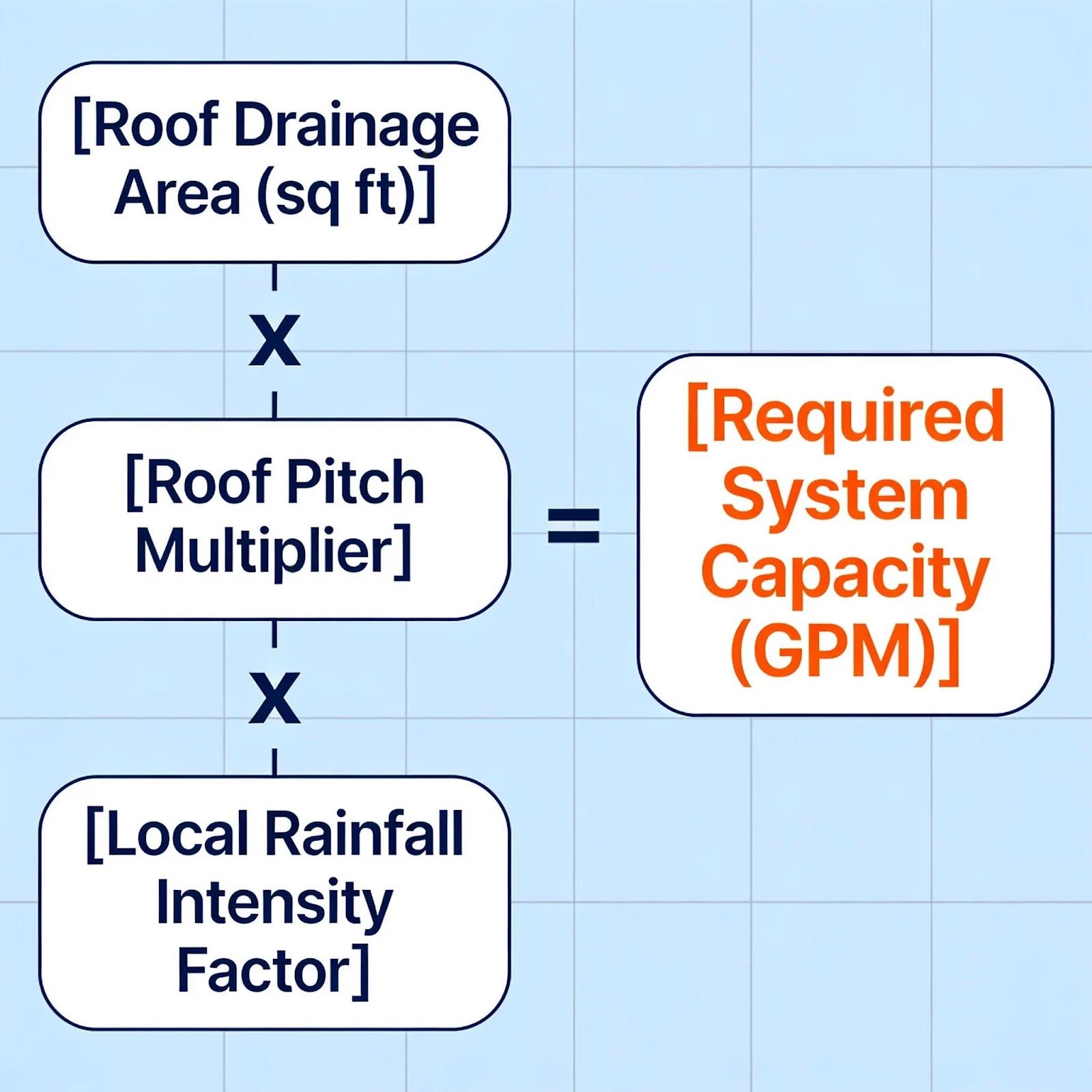
1. Roof pitch and water speed
Steeper roofs push water downward faster. A roof with a 12/12 pitch propels rainwater into the gutter trough with higher velocity than a flat 4/12 roof. We adjust trough depth and guard style to prevent high-velocity water from skimming over the outer lip.
2. Downspout placement and discharge sizing
A gutter trough is only as effective as its discharge points. Standard 2x3-inch downspouts choke when pine straw, oak tassels, and leaves combine with high water volume. Upgrading to commercial-grade 3x4-inch oversized downspouts doubles discharge capacity from 180 gallons per minute to 380 gallons per minute.
3. Subsurface water diversion
Dumping downspout discharge directly at the base of your house defeats the purpose of installing gutters. Our installation designs use downspout extensions or connect into underground PVC drainage pipes that carry water 10 to 20 feet away from your foundation footings.
For complete details on custom sizing, material colors, and local installation standards across Forsyth County, explore our specialized page for
gutter installation in Cumming, GA.
Protecting fascia boards and rooflines with pitch-perfect alignment
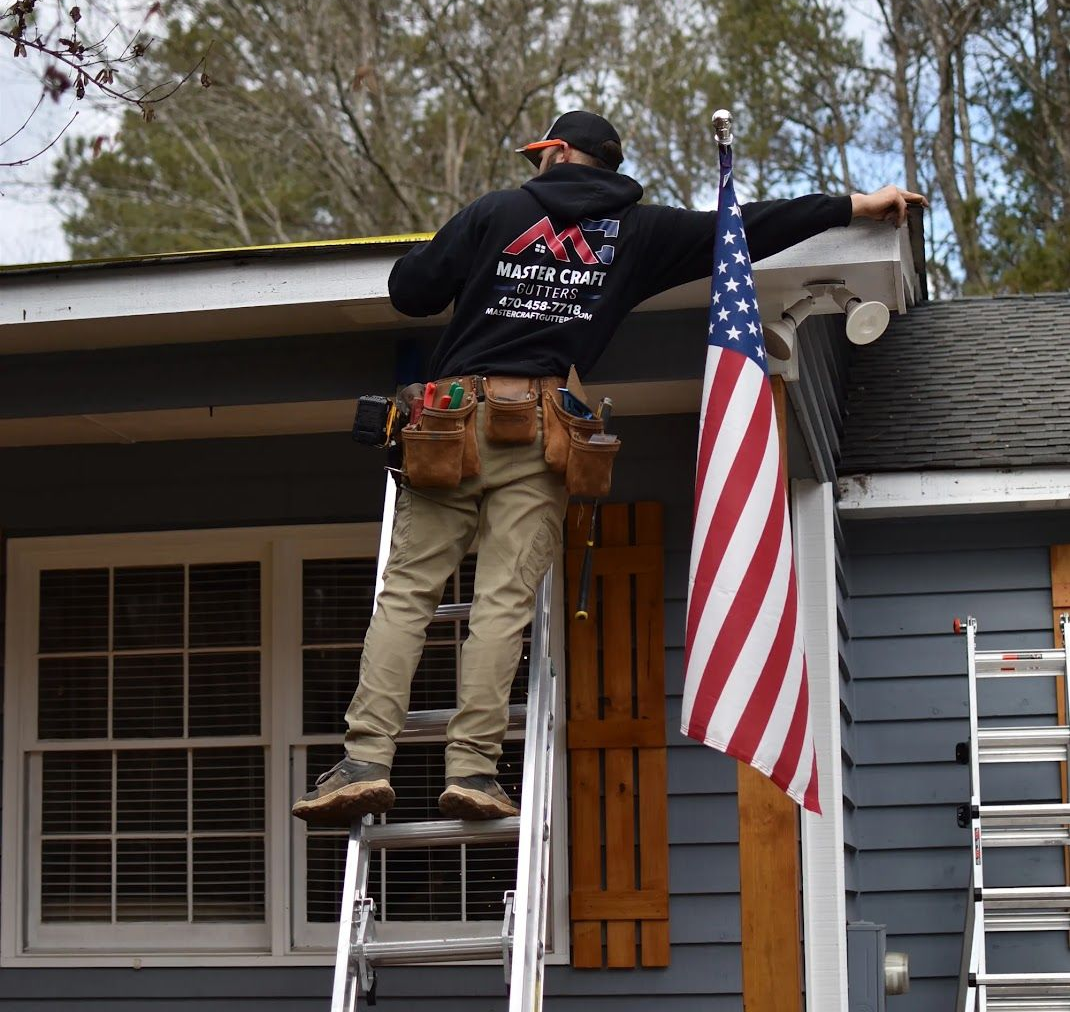
Proper slope calibration prevents standing water that rots wood fascia and compromises roof rafter tails.
Engineered gutters protect your foundation and safeguard your roofline at the same time. When gutters are installed without proper pitch, water sits stagnant in the trough.
The pitfalls of flat or back-pitched installation
- A 40-foot gutter run filled with 2 inches of trapped water and wet organic debris adds over 250 pounds of dead weight pulling against your fascia board. Over time, standard spikes or bracket screws pull free from the wood.
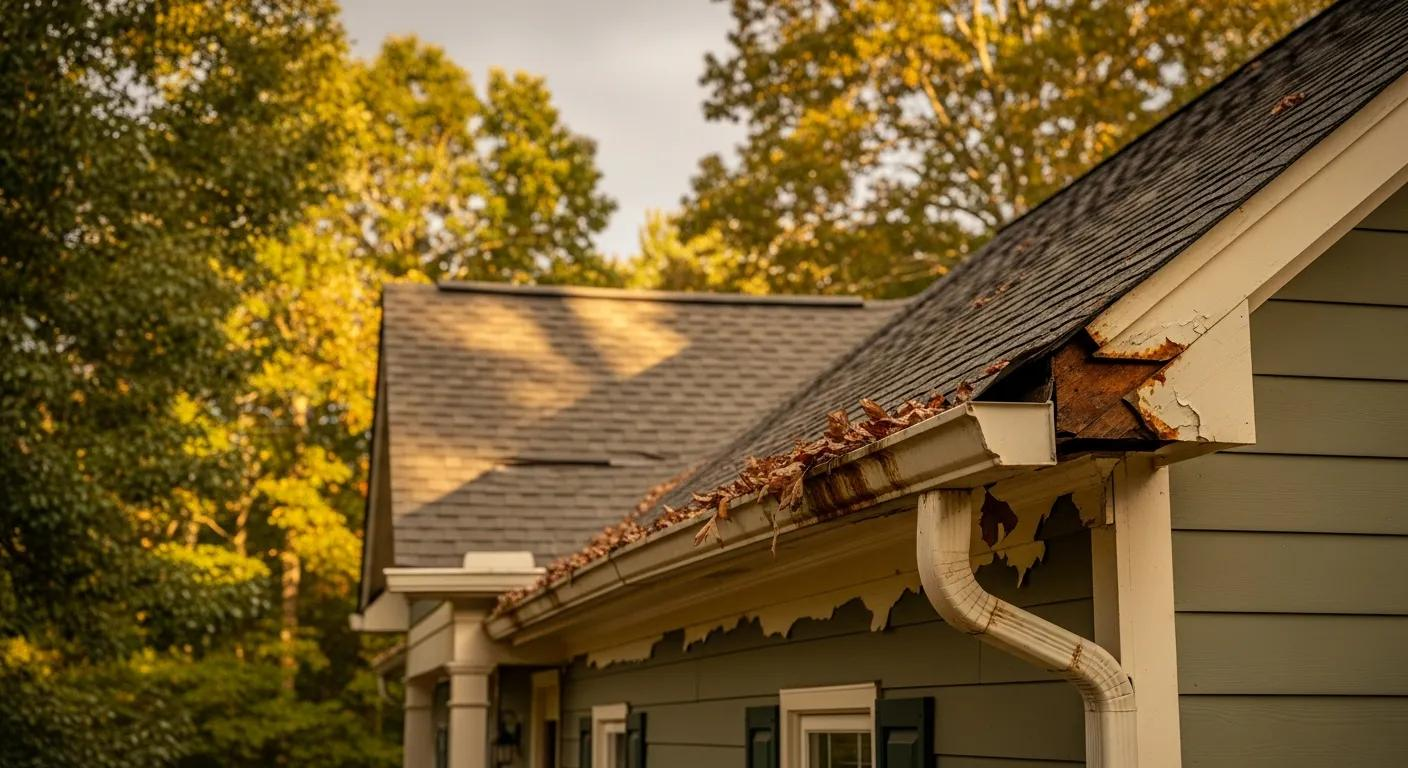
- Standing water wicks upward into the bottom edge of your roof deck and wooden fascia trim. Left unchecked, wood decay spreads into hidden rafter tails, leading to expensive roof repairs.
- Stagnant water in clogged or flat gutters creates a breeding habitat for Asian tiger mosquitoes within 48 hours of a rainstorm.
Heavy-duty internal hidden hangers
Rather than relying on outdated exterior spikes that loosen over time, Master Craft Gutters uses heavy-duty internal hidden hangers fastened with stainless steel lag screws. Screwed directly through the gutter wall and deep into the solid wood rafter tails every 24 inches, these hangers withstand heavy water loads and branch impacts without sagging.
Five warning signs your gutter system is failing
Inspecting your home after a rainstorm reveals early warning signs of gutter failure before foundation damage occurs.
You can perform a quick exterior check after any rainstorm. Look for these five indicators that your current drainage system needs attention:
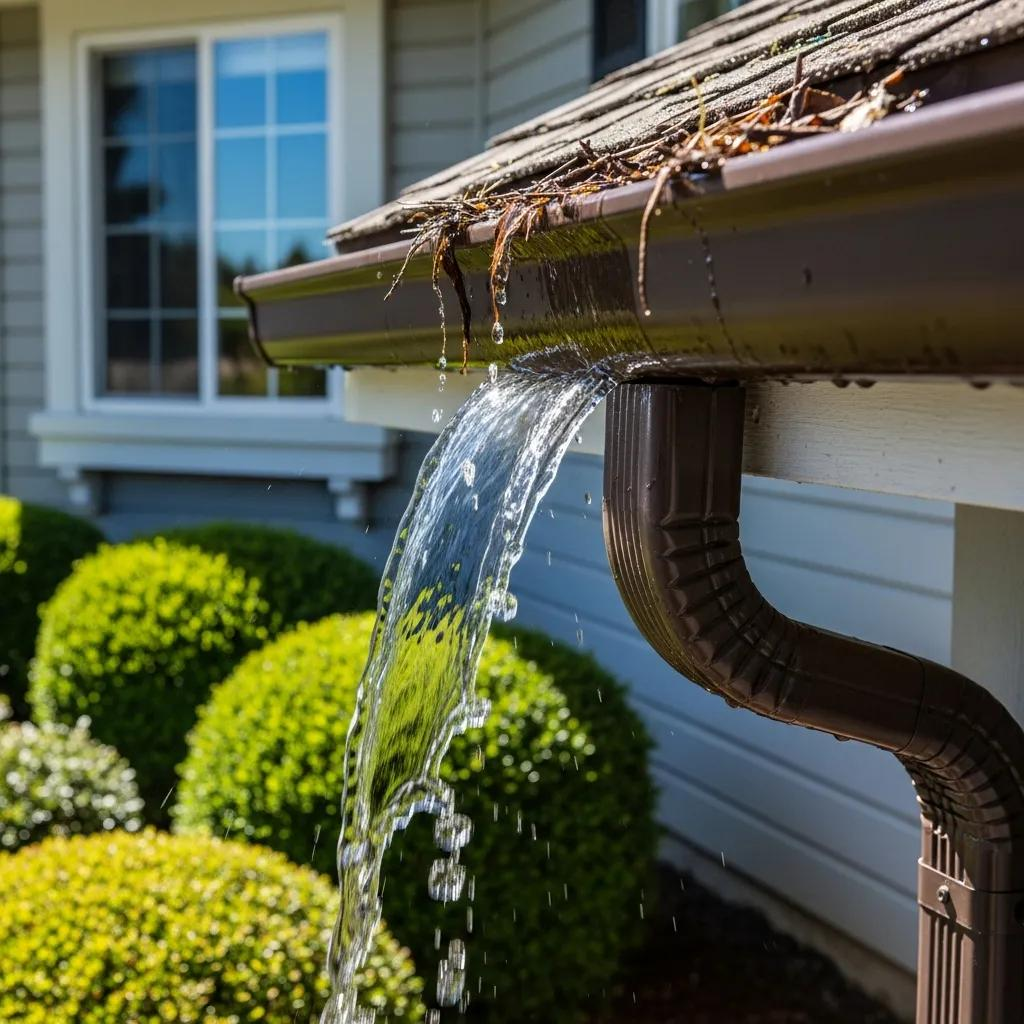
- Dark vertical streaks on the outside face of your gutters indicate consistent overflowing during storms.
- Deep grooves cut into your flower beds or exposed tree roots directly beneath gutter runs signal water spillage.
- Flaking paint or squishy wood behind your gutters shows that water is leaking backward behind the trough.
- Stagnant water remaining in the trough 24 hours after a storm proves the system lacks proper pitch.
- White powdery mineral deposits (efflorescence) on basement walls indicate moisture pushing through concrete from saturated external soil.
Safeguard your Cumming home with engineered gutters
Protecting your home from North Georgia's severe weather requires a proactive water management strategy. Standard 5-inch sectional gutters frequently overflow, sending concentrated stormwater into vulnerable red clay soil where it threatens your foundation and fascia boards. By upgrading to custom, continuous 6-inch seamless aluminum gutters equipped with 3x4-inch downspouts, you protect your structural investment with a system built to handle heavy rainfall.
Ready to resolve your home's drainage issues before the next heavy storm? The experienced team at Master Craft Gutters is here to deliver custom, precision-crafted seamless gutter solutions tailored to your roofline.
Take the next step in home protection:
Schedule a free gutter inspection and estimate today or call our local team to speak with a specialist.
Author profile
Jesse Vlaun, Founder of Master Craft Gutters and Construction LLC. Jesse Vlaun is the founder of Master Craft Gutters and Construction LLC, a veteran-owned water management and exterior contractor headquartered in Cumming, Georgia. With years of hands-on experience protecting homes across Forsyth County and North Georgia, Jesse leads a skilled team specializing in custom on-site seamless gutter fabrication, high-capacity drainage systems, and fascia restoration—delivering honest, punctual service without upsells or hidden fees.